
The Rise of Climate-Driven Urban Migration: A Weak Signal Disrupting Demographics and Economies by 2050
Climate change is reshaping migration patterns worldwide in subtle but profound ways. While traditional migration drivers—such as economic opportunity, conflict, and political stability—remain critical, an emerging signal of climate-induced urban migration may redefine global urbanization and labor ecosystems by mid-century. This disruptor challenges industries, governments, and planners to reassess demographic forecasts, infrastructure resilience, and strategic workforce planning.
What’s Changing?
Urban populations are growing at an unprecedented rate. By 2050, nearly two-thirds of humanity are expected to live in cities (Exploring the Biggest Big Cities of the World, 2025). This migration is not merely a consequence of economic factors but increasingly reflects climate-related pressures driving internal and cross-border displacement.
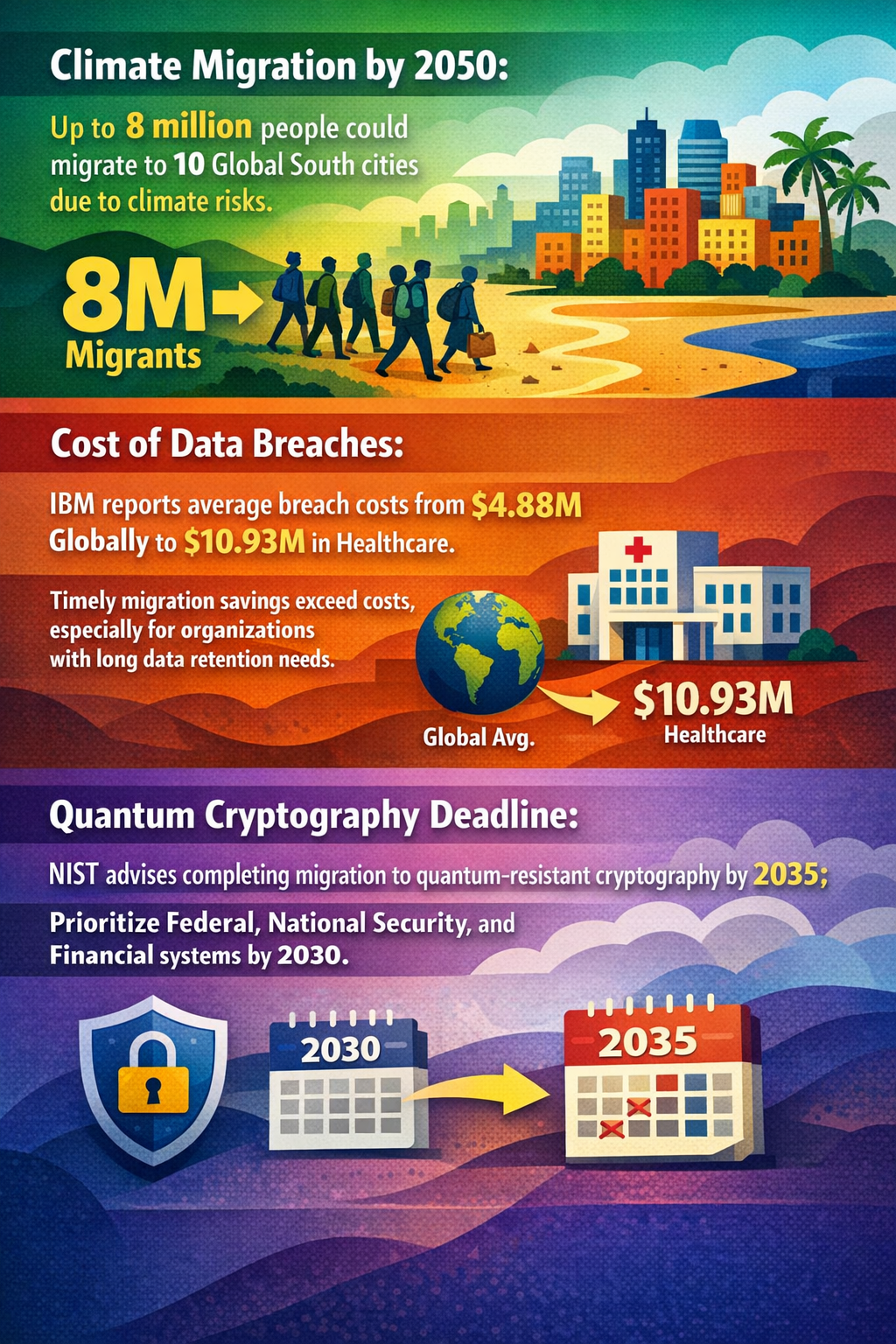
A growing body of research points to climate change as a significant driver of future migration flows. Studies by C40 Cities and the Mayors Migration Council estimate that by 2050, up to eight million people might relocate to just ten cities in the Global South due to climate-related risks such as rising sea levels, droughts, and extreme weather events (The Sierra Leone Telegraph, 2025). This spatial concentration of migration responses may lead to unprecedented stress on urban infrastructure and services in already vulnerable regions.
Current migration trends are also influenced by diverse national policies and demographic shifts. For example, countries like Switzerland anticipate a need for 430,000 additional workers by 2040, an exigency unlikely to be met without continued immigration (AINvest, 2025). Meanwhile, U.S. economic growth projections emphasize immigration as critical, with restricted flows threatening GDP expansion (The Care Imperative, 2025).
However, these demographic movements are not simply about the volume of migrants. They involve increasingly nuanced policy responses such as continuous immigration vetting in the U.S., emphasizing national security and public safety over migrants’ lifetime, reflecting evolving governance models (Federal Register, 2025).
Simultaneously, shifts toward skills-based immigration, as seen in New Zealand’s overhaul of work visa processes aligned to national occupation lists, spotlight the strategic reorientation of migration to serve economic innovation and growth objectives (Travel and Tour World, 2025).
At the same time, migration flows sensitive to climate factors amplify geopolitical and security concerns. Rising environmental pressures contribute to international security dynamics, demanding new strategic intelligence approaches (Nation.com.pk, 2025). The uneven distribution of migrants and the focusing of pressures on select urban hubs could destabilize regions and strain global governance frameworks.
Why Is This Important?
The intertwining of climate change and migration represents a multi-dimensional disruptor to urbanization, labor markets, and public policy. For industries, the implications include:
- Labor shortages and shifts: Countries like Switzerland and the U.S. that rely on immigration to fill labor gaps may face amplified challenges if climate-driven migrations disproportionately affect regions with high demand for workers.
- Urban infrastructure demands: Cities in the Global South potentially receiving millions of climate migrants will confront serious challenges in housing, transportation, sanitation, and healthcare systems.
- Economic realignment: Regions losing populations to climate migration may experience economic stagnation or decline, affecting global supply chains and market demand patterns.
- Policy complexity: Migratory flows influenced by environmental factors prompt governments to rethink immigration frameworks, balancing national security and economic needs.
This trend may also recalibrate international relations, with countries adjusting diplomatic and trade policies in response to shifting demographic realities. Investments in workforce development may need to account not only for aging populations—as forecasted in Colorado’s workforce—but also for the influx of migrants with varying skills and integration needs (CPR.org, 2025).
Implications
The confluence of these developments suggests several strategic implications for key stakeholders:
- Governments must design agile immigration policies incorporating environmental factors and long-term demographic projections to harness migration for economic growth without compromising security and social cohesion.
- Urban planners and local authorities are likely to face pressure to innovate in climate-resilient infrastructure, affordable housing, and public services to absorb rapid migration influxes, particularly in Global South megacities.
- Businesses may need to reconsider location strategies, talent sourcing, and supply chains as workforce distributions shift according to climate-triggered migration.
- Researchers and strategic intelligence professionals will have to develop integrated models combining climate data, migration trends, and socioeconomic impacts, enabling anticipation of disruptions and opportunities.
- Global cooperation mechanisms could require enhancement, focusing on sharing migration management best practices, infrastructure investments, and security collaboration centered on climate migration challenges.
Failing to address this weak signal risks amplifying social inequality, urban overcrowding, and economic volatility. Conversely, proactive responses may unlock new labor pools, stimulate urban innovation, and promote sustainable development aligned with climate adaptation strategies.
Questions
- How can policymakers integrate climate risk projections with migration management frameworks to develop adaptive and humane immigration policies?
- What urban infrastructure investments enable cities to anticipate and absorb climate-driven population influxes without compromising quality of life?
- In what ways can businesses anticipate and mitigate labor market disruptions caused by climate migration?
- How might security agencies balance continuous vetting of migrants with preserving human rights and encouraging economic integration?
- What platforms for international collaboration can better support cities and nations facing simultaneous environmental and demographic upheavals?
Keywords
climate migration; urbanization; workforce shortages; immigration policy; climate resilience; demographic change; Global South cities
Bibliography
- By 2050, nearly two-thirds of humanity will be urban inhabitants - a change far from trivial, signifying a profound migration that is fundamentally reshaping societies and economies worldwide. CitiesABC. https://citiesabc.com/exploring-the-biggest-big-cities-of-the-world-a-2025-population-snapshot
- Studies by C40 Cities and the Mayors Migration Council (MMC) project that by 2050, up to eight million people could migrate to just ten Global South cities due to climate-related risks. The Sierra Leone Telegraph. https://www.thesierraleonetelegraph.com/cities-can-lead-global-climate-ambition-not-wait-for-nations-op-ed/
- Switzerland will need 430,000 more workers by 2040, a gap that cannot be filled without continued immigration. AInvest. https://www.ainvest.com/news/swiss-population-cap-vote-spur-labor-shortages-trade-risks-2512/
- Without sustained immigration to the United States, GDP growth will be near impossible, and allowing for larger flows of immigration is one of the only options for policymakers who do not want to see the rate of GDP growth slow. The Care Imperative. https://tcf.org/content/report/the-care-imperative-why-investing-in-care-grows-americas-economy/
- DHS plans to implement a program of continuous immigration vetting and require that aliens receive continued and subsequent evaluation to ensure they continue to present no risks to national security or public safety subsequent to their entry. Federal Register. https://www.federalregister.gov/documents/2025/11/03/2025-19747/collection-and-use-of-biometrics-by-us-citizenship-and-immigration-services
- The move towards skills-based immigration will encourage more professionals to relocate to New Zealand, which can drive innovation and growth in the tourism sector. Travel and Tour World. https://www.travelandtourworld.com/news/article/new-zealand-travel-shines-as-immigration-overhaul-simplifies-work-visa-process-with-national-occupation-list-what-you-need-to-know/
- As environmental pressures intensify, migration flows will continue to rise, reshaping demographic patterns and influencing global security dynamics. Nation.com.pk. https://www.nation.com.pk/10-Dec-2025/migration-due-climate-change-implications-international-security
- Colorado’s workforce is aging, and in-migration is declining, with the ratio of working-age to retirement-age Coloradans expected to plummet from 5:1 to 2:1 by 2050. CPR.org. https://www.cpr.org/2025/12/10/polis-proposed-workforce-training-department/