
The Quiet Rise of Mobility-as-a-Service (MaaS) as a Structural Disruptor in Megacity Urbanisation
Exploring an underappreciated catalyst in urban transformation, this paper examines how the integration of Mobility-as-a-Service (MaaS) platforms could reshape megacity development, capital flows, and regulatory landscapes over the next two decades. While smart city initiatives and infrastructure expansion dominate current dialogue, MaaS presents a nascent inflection point with wide-ranging implications for sectoral consolidation, urban planning, and governance innovation.
At first glance, rapid urbanization in Asia-Pacific and smart city funding appear as expected growth trajectories. Yet emerging within this growth is a weak signal: the rising prevalence of MaaS ecosystems combining ride-share services, digital data platforms, and multimodal connectivity. This integration is not merely incremental mobility innovation but could recalibrate industrial structures and regulatory paradigms governing urban transport, consumption, and land use. Evaluating this signal critically reveals potential for structural change affecting capital deployment, policy frameworks, and strategic positioning across public and private sectors within 5–20 years.
Signal Identification
This development qualifies as an emerging inflection because it is a subtle but accelerating shift in urban mobility behaviors supported by digital infrastructure, yet not widely recognized as a foundational disruptor to urbanisation and megacity governance. The signal horizon plausibly spans 5–20 years, reflecting early-stage deployments leading to ecosystem effects that could transform sectors like transport, real estate, digital infrastructure, and regulatory regimes.
The plausibility band is medium-high, given increasing investment and adoption trends in Asia-Pacific demonstrated by coordinated public-private initiatives and smart city digital expansions (EIN Presswire 07/06/2023; OpenPR 03/06/2023). Sectors exposed include urban mobility and transportation, digital infrastructure, urban real estate, regulatory authorities, and capital markets.
What Is Changing
Literature convergence reveals three recurring interrelated themes that emphasize a broader shift beyond typical smart-city or urbanization narratives.
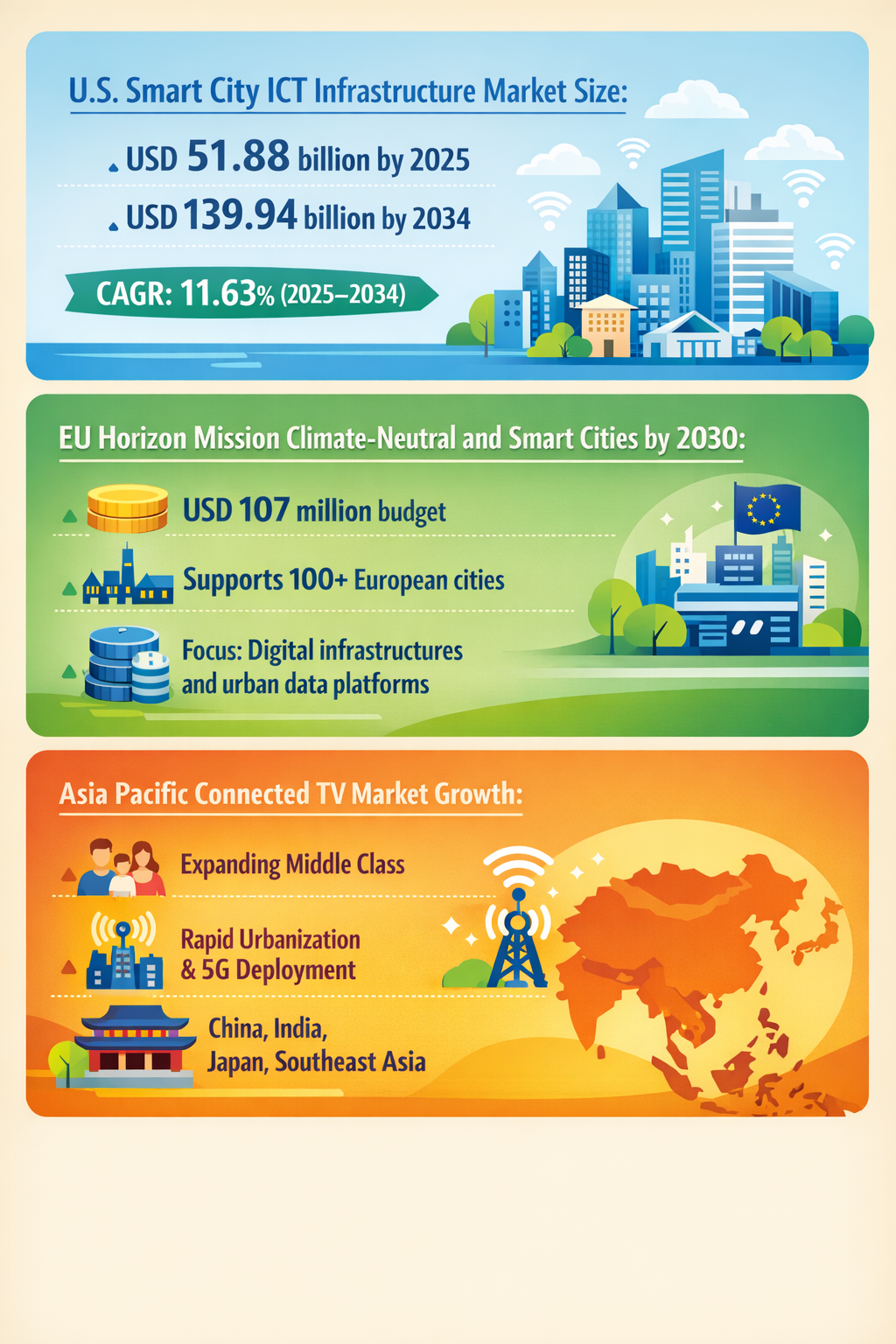
First, Asia-Pacific’s rapid urban population growth, particularly in China and India, is driving an exponential rise in demand for resilient, scalable mobility solutions (OpenPR 03/06/2023; EIN Presswire 07/06/2023). However, this demand is met not by traditional transport infrastructure upgrades alone but via MaaS platforms that unify disparate ride-share, public transit, and micromobility options into seamless digital experiences. This systemic integration is advancing concurrently with digital infrastructure investments championed by initiatives like the EU Horizon Mission Climate-Neutral and Smart Cities (MarkNtel Advisors 15/05/2023).
Second, these MaaS platforms extend beyond conventional ride-sharing by embedding predictive analytics, energy-efficient touchless systems, and urban digital twins for operational optimization—that is, anticipatory rather than reactive urban mobility management (Yahoo Finance 02/05/2023). This introduces novel data governance and privacy complexities, posing regulatory challenges not yet fully accounted for in urban planning or transport governance frameworks.
Third, the commercial ecosystem expansion includes indirect boosters such as increasing access to healthcare, infant nutrition, and materials sectors driven by urbanization (linked to metals and steel production sustaining construction and infrastructure growth) (Atradius 20/03/2023; Persistence Market Research 12/04/2023). This broader structural economic evolution intertwines with shifts in urban mobility, implying cross-sectoral capital allocation shifts towards integrated polycentric urban ecosystems powered by MaaS and smart digital infrastructures.
Disruption Pathway
MaaS stands poised to escalate from niche adoption to structural transformation through several reinforcing mechanisms. Initially, accelerated digital infrastructure investments enhance platform capabilities and data integration. Governments, pressured by urban congestion, pollution, and infrastructure funding limits, may increasingly favor MaaS as a cost-effective alternative to massive traditional transport capital projects.
As platform users and mobility providers scale, incumbents in transport, real estate, and automotive sectors experience stresses on established revenue streams and asset valuations—particularly privately owned vehicles and static land use models. This will prompt structural adaptations including regulatory reforms enabling dynamic curb management, digital rights-of-way, and tiered mobility pricing anchored in MaaS data intelligence (EIN Presswire 07/06/2023).
Feedback loops may emerge from integrated urban data platforms expanding beyond mobility—linking energy, health access, and social services—thereby accelerating polycentric, service-rich urban designs. Unintended consequences might include intensified regulatory complexity, privacy conflicts, and economic exclusion risks if MaaS deployments exacerbate inequalities without equitable governance.
Over time, successful MaaS models could shift dominant urban governance from infrastructure-heavy municipal oversight to agile, multi-stakeholder digital platform stewardship. Capital allocation may follow, prioritizing software-driven integrated urban services and away from legacy transport infrastructure, restructuring industrial hierarchies around mobility ecosystems instead of vehicle manufacturing or siloed public transport operations.
Why This Matters
For senior decision-makers, this signal directly influences where and how capital is allocated, with implications for infrastructure investment portfolios and innovation funding pipelines. Private sector incumbents must consider potential obsolescence of traditional vehicle sales, parking infrastructure, and real estate formats favoring private ownership.
Regulators face novel governance challenges balancing innovation encouragement with data privacy, competition, equitable access, and system resilience. Liability frameworks may need overhaul as physical infrastructure liability gives way partially to digital-platform-based accountability.
Industry competitiveness will pivot on capability to integrate cross-sector data streams and participate in mobile-as-a-service ecosystems. Public sector governance may need to evolve toward more federated, data-driven frameworks to orchestrate complex urban service networks, conditioning future urbanization models.
Implications
MaaS integration could plausibly reshape urban transport and governance within 5–20 years, becoming a structural pillar rather than an incremental innovation. This may shift capital markets toward software- and data-centric urban infrastructure investments and away from traditional transport capital.
The development is unlikely to be a transient fad focused solely on ride-sharing expansion; rather, it represents a systemic integration enabled by digital infrastructure and urban data platforms. Although competing views might construe MaaS as niche or easily disintermediated by new tech, coordinated ecosystem expansion and regulatory adaptation challenge such dismissals.
However, wide-scale structural shifts require enabling conditions such as sustained digital investment, regulatory openness, and social acceptance of shared, data-intensive mobility models. Without them, MaaS risks remaining a supplementary urban convenience rather than a core urban system driver.
Early Indicators to Monitor
- Urban transport infrastructure investment patterns favoring digital connectivity and platform APIs over physical expansions
- Regulatory updates on dynamic curb management, data governance, and mobility service licensing
- Venture capital flows clustering around integrated MaaS and urban data platform startups
- Formation of cross-sector consortiums or standards bodies for urban mobility data interoperability
- Public procurement shifts prioritizing MaaS-enabled transport services over direct asset ownership
Disconfirming Signals
- Major regulatory backlash restricting digital data integration or mobility platform consolidation
- Persistent technological limitations preventing reliable, scalable MaaS interoperability
- Entrenched incumbents successfully lobbying to block MaaS platform expansion
- Public resistance to data privacy trade-offs or shared mobility reducing adoption rates
- Significant infrastructure investment surges in legacy transport modes decoupled from MaaS strategies
Strategic Questions
- How can capital allocation strategies hedge or leverage the shift toward MaaS-based urban mobility ecosystems?
- What regulatory frameworks must be proactively designed to balance innovation, data privacy, and equitable access in MaaS implementation?
Keywords
Urbanisation; Megacities; Mobility-as-a-Service; Smart Cities; Digital Infrastructure; Urban Mobility; Data Governance; Regulatory Frameworks; Capital Allocation; Transportation
Bibliography
- Industry Analysis Report on Ride-Share Pickup Zone Management 2026 Major Trends, Growth Factors and Forecast Overview. EIN Presswire. Published 07/06/2023.
- Mobility-as-a-Service Market Valuation to Surpass USD 2775.45 Million, 2023 Report. OpenPR. Published 03/06/2023.
- The EU Horizon Mission Climate-Neutral and Smart Cities by 2030 funds systemic smart city transitions. MarkNtel Advisors. Published 15/05/2023.
- Elevator & Escalator Industry Report 2026: Demand for Energy-Efficient and Touchless Systems. Yahoo Finance. Published 02/05/2023.
- Industry Trends Metals and Steel March 2026. Atradius. Published 20/03/2023.
- Autism Spectrum Disorder Treatment Market: Growth Driven by Urbanization and Government Initiatives. Persistence Market Research. Published 12/04/2023.