
Beyond the Hype: The Emerging Wildcard of Permission-Aware AI Repositories as a Structural Inflection in AI & Automation
Permission-aware AI repositories represent a subtle yet transformative development poised to reshape AI deployment, data governance, and capital allocation in the coming decade. Unlike the overt surges in AI spending and automation-driven productivity gains, this signal centers on secure, compliant, and scalable AI knowledge management—an overlooked determinant of mainstream AI’s structural sustainability. This insight paper reveals how permission-aware repositories could usher unseen shifts across regulatory architectures, industrial ecosystems, and strategic positioning by 2036.
The rapid proliferation of enterprise AI adoption demands systems able to maximize trust, transparency, and compliance at scale. Current mainstream narratives emphasize AI’s operational and economic potential but largely overlook the infrastructural challenges of governance and IP management linked to AI knowledge assets. Permission-aware AI repository gateways, which securely govern data and AI model usage on an enterprise-wide level, stand at the nexus of these forces, presenting an emerging inflection potentially rivaling investment or automation trajectories in strategic impact.
Signal Identification
This development qualifies as an emerging inflection indicator. Although still peripheral relative to headline AI applications or automation technologies, permission-aware AI repositories are gaining credible market traction, with projections anticipating a market size of USD 668 billion by 2036 (Morningstar 13/04/2024). The structural significance lies not in a single technology breakthrough but in the foundational shift toward governing AI knowledge assets as highly regulated, cored strategic resources.
Projected over a 10–20 year horizon, this development has a medium-to-high plausibility band given accelerating regulatory scrutiny on AI compliance, intellectual property, and data privacy alongside enterprise digital transformation trends. Key exposed sectors include manufacturing, telecommunications, healthcare, IT operations, and regulatory compliance domains.
What Is Changing
Multiple intersecting developments across AI and automation reveal a pressing need for robust governance frameworks beyond the capabilities of traditional compliance or security paradigms. For example, enterprises face mounting pressures to enable “permission-aware” AI that respects IP rights, data sovereignty, and ethical governance in real time, transcending the legacy “back-office” compliance functions now described as “real-time business enablers” (Accorian 14/03/2024).
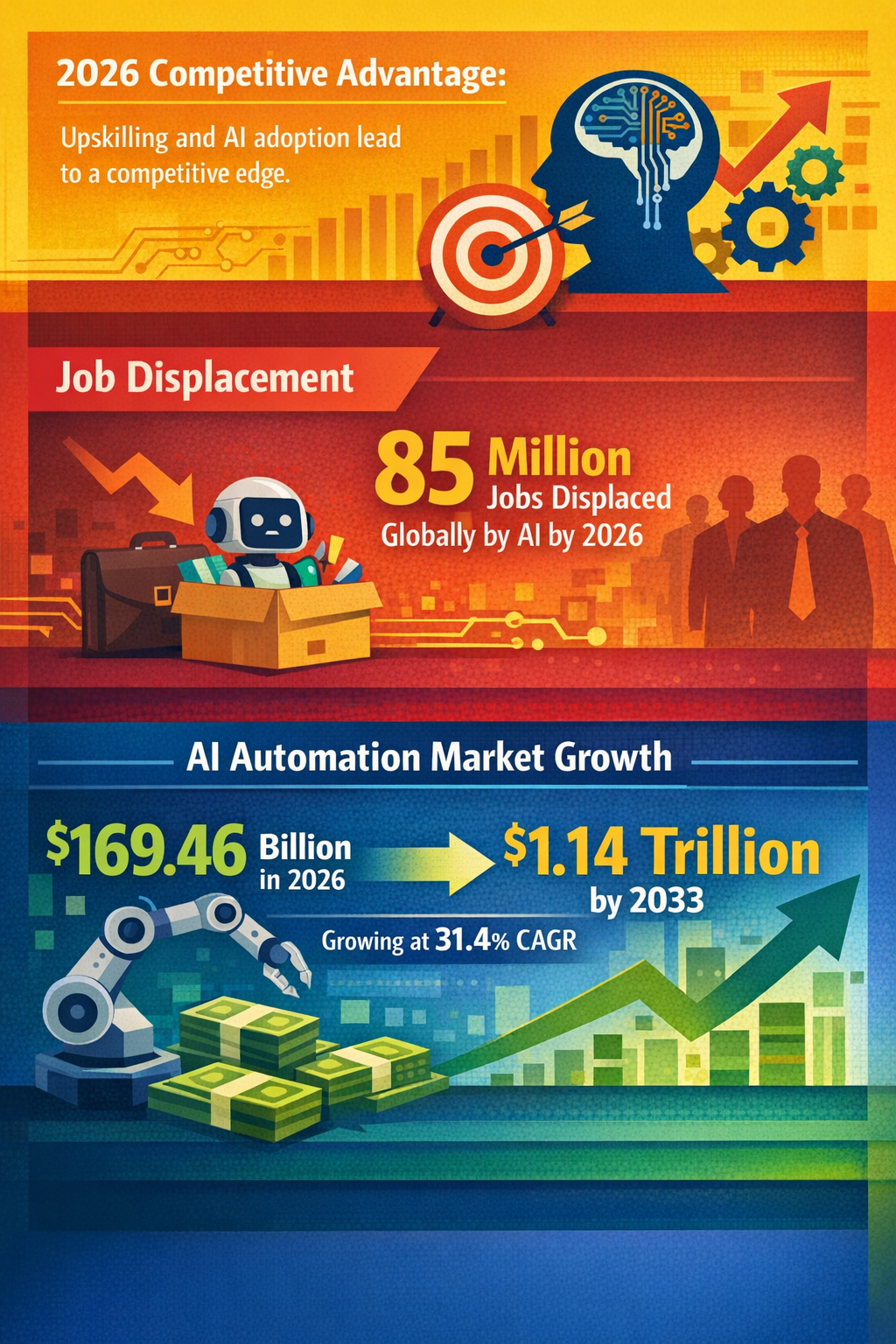
Simultaneously, explosive AI adoption across sectors magnifies the volume and complexity of AI models, datasets, and automation workflows operating in distributed and regulated environments. AI agents alone are forecasted to generate over $2.6 trillion to $4.4 trillion annually in economic value (Symphony Solutions 20/02/2024), demanding scalable systems to manage federated AI intellectual property and provenance with permissioning controls.
In telecommunications, AI-enabled network automation is projected to surpass $8 billion by 2026 (CareerTrainer.ai 03/01/2024), underscoring the need for tightly governed AI deployments across critical infrastructure. Meanwhile, manufacturing sectors eye $1.2 trillion to $2 trillion in annual value potential from AI but face intricate regulatory and operational risk environments (EITBiz 17/02/2024).
These pressures reveal a structural theme: the emergence of AI knowledge governance as an enabler and bottleneck simultaneously. Unlike incremental improvements in automation or AI performance, permission-aware repositories represent a systemic shift in how data and AI intellectual property are controlled, accessed, auditable, and updated across enterprise ecosystems.
Disruption Pathway
Initially, enterprises confronting compliance, security, and IP protection complexities will accelerate investments in permission-aware AI repositories as foundational infrastructure. As AI adoption scales globally, the heterogeneity of AI models and data sources will stress existing governance mechanisms, creating operational risk and liability exposures.
This will induce institutional and industrial adaptations: regulatory frameworks will evolve from prescriptive rules to dynamic, permission-based controls embedded in AI platform architectures. Firms pioneering permission-aware repositories will gain strategic control over AI intellectual capital and ecosystem access, potentially reshaping supply chains and opening novel monetization paths such as AI model licensing marketplaces.
The interplay between regulation and innovation will generate feedback loops. Enhanced compliance capability will incentivize more regulated industries—healthcare, defense, finance—to adopt AI aggressively, fueling further repository sophistication. Conversely, lax permission governance may prompt liability crises, intensifying regulatory clampdowns and driving repository adoption.
Over time, dominant AI platform providers and regulators may coalesce standards around permission-aware architecture, redefining capital allocation priorities from raw compute or AI algorithm races toward governance and trust infrastructure investments. This could structurally shift competitive dynamics, with ecosystem positioning hinging on governance, not just technological superiority.
Why This Matters
For capital allocators, permission-aware repositories may emerge as key infrastructure assets demanding large, sustained investments far exceeding typical AI model R&D spend. Venture and private equity strategies focused solely on application-layer AI risk missing the systemic shifts in AI governance platforms.
Regulators could face new challenges and opportunities: evolving from rule enforcement to co-developers of permission-aware standards may transform regulatory frameworks into enabling engines for compliant AI innovation. There is potential for preemptive rule-making embedding repository mandates to forestall liability risks.
Industrial actors have an opportunity to reposition supply chain and partnership models around federated AI governance, shifting from transactional data sharing to permissioned AI asset ecosystems. Firms that fail to integrate permission-aware governance risk exposure to IP infringement, compliance failures, or operational disruptions.
Liability and governance models are likely to move from broad compliance certifications to granular, real-time permission verification embedded in AI deployments, materially changing risk management approaches.
Implications
Permission-aware AI repositories could likely evolve from niche compliance add-ons into indispensable pillars of AI industrial ecosystems. They may reshape what constitutes investible AI infrastructure, influencing capital allocation from predominantly compute/hardware toward governance and security layers.
This development should not be confused with incremental improvements in AI model accuracy or automation scale; it uniquely targets the governance architecture underpinning sustainable AI adoption. It differs from hype cycles around “AI agents” or “robotics” by its focus on control and trust mechanisms operating across heterogeneous data and AI model portfolios.
Potential competing interpretations might argue that continued advances in explainability or privacy-enhancing technologies will obviate the need for structured permission-aware repositories. However, the complementary regulatory shift toward real-time, embedded compliance systems gives this signal a compelling base to scale structurally.
Early Indicators to Monitor
- Standards formation activities for AI model IP licensing and permission protocols by bodies such as ISO or IEEE
- Enterprise procurement shifts favoring AI platforms with embedded permission-aware governance features
- Growth in venture funding and M&A activity targeting AI knowledge management startups and repository providers
- Draft regulations mandating AI usage governance tied to data sovereignty or real-time compliance verification
- Corporate disclosures reflecting governance-related capital expenditures within AI adoption programs
Disconfirming Signals
- Emergence of universally accepted, decentralized AI governance models removing need for centralized permission-aware repositories
- Failure of early repository deployments to demonstrate operational or regulatory benefits leading to market rejection
- Abrupt regulatory environment shifts favoring minimal governance intervention in AI, reducing incentives
- Breakthroughs in AI explainability or privacy technologies that fully automate compliance without permission layers
- Significant AI security incidents traced to permission repository failures undermining trust in the model
Strategic Questions
- How might investment portfolios be recalibrated to incorporate AI governance infrastructure alongside compute and algorithmic innovation?
- What regulatory and industrial partnerships are needed now to shape emergent permission-aware AI repository standards and incentives?
Keywords
permission-aware AI repository; AI governance; AI compliance; intellectual property; enterprise AI; AI regulation; automation
Bibliography
- Permission-aware AI repository gateway market to reach USD 668 billion by 2036 as secure enterprise AI retrieval and governance drive adoption. Morningstar. Published 13/04/2024.
- AI-driven automation could generate between $2.6 trillion and $4.4 trillion in annual economic value. Symphony Solutions. Published 20/02/2024.
- In 2026 and beyond, compliance will no longer be a back-office obligation - it will become a real-time business enabler powered by intelligent automation. Accorian. Published 14/03/2024.
- AI-enabled network automation solutions are projected to reach $8 billion by 2026 within the telecom sector. CareerTrainer.ai. Published 03/01/2024.
- AI adoption in manufacturing could generate between $1.2 trillion and $2 trillion in value annually. EITBiz. Published 17/02/2024.